
11 Types of Backflow Preventers: Which One Do You Need?
Backflow preventers are important because they protect drinking water from hazardous contamination and ensure compliance with plumbing codes. When ... Read More
Same-Day Service Available
Need a Plumber in Knoxville? We’re Ready to Help!

Same-Day Service Available
Need a Plumber in Knoxville? We’re Ready to Help!




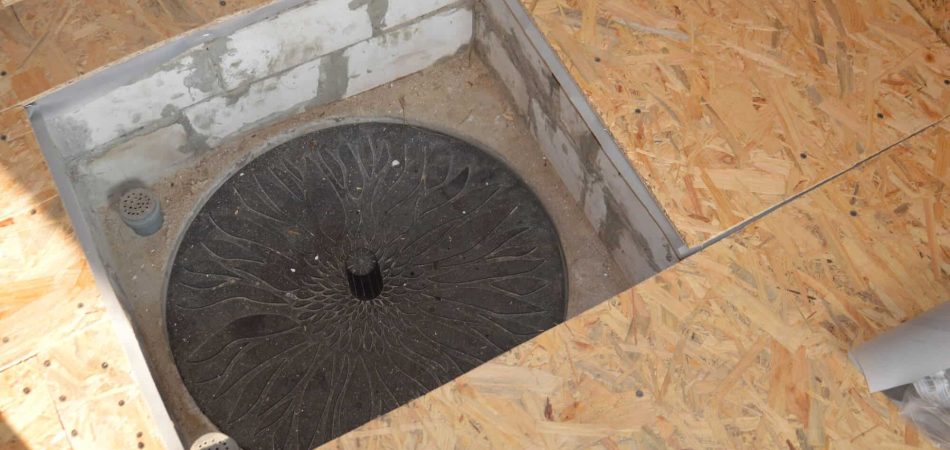
Hiding a basement sump pump requires striking the right balance between style and practicality. The goal is to maintain easy access for maintenance while enhancing the room’s appearance. Solutions can range from simple decorative touches to custom-built enclosures that turn the pump area into a functional, visually appealing feature.
A sump pump is a crucial device; it pumps water away from a basement to prevent flooding. Homeowners choose to hide this essential machine, especially in finished basements, because an exposed sump pump looks unsightly and ruins the room’s aesthetic appeal. Concealing the pump transforms a functional space into a clean, appealing living area.
General ways to conceal a sump pump fall into visual, structural, and decorative categories. Visual methods block the pump from sight, structural enclosures integrate the pump into permanent fixtures, and decorative approaches use clever camouflage.
The benefits include a much nicer look, quieter operation because enclosures muffle noise, and protection from dust or accidental damage. A homeowner’s effort makes the basement a truly usable part of the home.
Here are nine creative methods for hiding your sump pump:
Tennessee Standard Plumbing offers homeowners durable, high-performance sump pumps with expert installation for reliable, long-lasting protection. Our systems are engineered for quiet operation, making them a smart choice for both performance and discreet concealment in any basement. Book your sump pump service with us today and protect your home before the next storm hits.
A decorative wooden enclosure is a simple box built to surround the sump pump pit. This method completely hides the pump and its plumbing, turning it into a nice, finished feature.
This neat solution offers great benefits. You instantly boost your basement’s look and protect the pump from dust and accidental bumps. The hinged lid grants easy access for maintenance, which is important. This makes servicing the unit simple.
Materials Needed: Plywood or MDF board, decorative trim, hinges, screws, paint or stain, and a safety latch.
A vented utility bench means building a sturdy seating unit that sits right over the sump pit area. It serves two purposes: providing storage or seating while entirely concealing the pump. It’s a very clever way to use the space.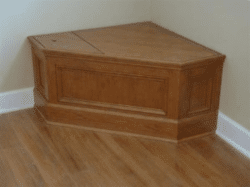
Using a bench works wonders for hiding the pump. It provides functional seating or a place to set things, making the sump pump area useful. Vents built into the bench allow air circulation, which prevents moisture buildup and protects the pump’s motor from overheating. It also really cuts down on the noise level.
Materials Needed: Lumber (2x4s or 4x4s), plywood for the top, cabinet ventilation grates, screws, durable sealant, and foam padding (optional for seating).
Creating a faux fireplace feature involves constructing a decorative mantle and surround that entirely encompasses the sump pit. The pump disappears inside a permanent, architectural focal point, which gives the room a cozy feel.
The benefits here are huge for aesthetics. This design makes the basement feel warm and finished, drawing attention away from the pump location. The structure offers excellent noise reduction because the thick walls absorb sound. Furthermore, it adds a substantial feature that increases the home’s interior appeal.
Materials Needed: Plywood or drywall, framing lumber, molding/trim pieces, faux stone or brick veneer, screws, mortar or adhesive, fireplace mantelpiece (pre-made or built).
Designing a basement bar or countertop means building a finished cabinet unit that incorporates a bar surface, completely enclosing the sump pit inside its structure. You basically build a mini-kitchen around the pump.
This method transforms a necessary utility area into a fun entertainment zone. You get a functional bar or prep area, and the pump is completely hidden and protected. Building this kind of substantial unit reduces pump noise significantly. It also makes the basement feel custom-designed and upscale.
Materials Needed: Kitchen base cabinets, countertop material (laminate, wood, or quartz), access panel hardware, plumbing piping (extension, if necessary), screws, and paint or stain.
A sliding barn door closet involves framing a small closet around the sump pump and installing a rustic-style barn door that slides open for access. This creates an attractive, modern farmhouse look.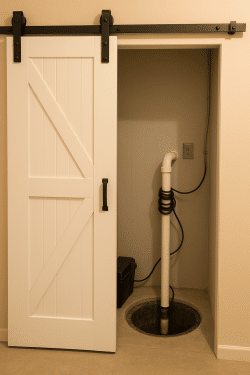
Using a sliding barn door offers a stylish and practical solution. The door itself becomes a nice decorative element in the room. This method does not require swing space, saving floor area, which is great in smaller basements. The closet structure also helps dampen noise, keeping things quiet.
Materials Needed: Framing lumber (2x4s), drywall or plywood, barn door hardware (track and rollers), wooden barn door, screws, spackle, and paint.
A removable floor hatch involves creating a section of the basement floor that lifts out completely, sitting perfectly flush with the rest of the flooring. The pump sits hidden directly underneath this secret panel.
The primary benefit of a floor hatch is invisibility. The pump disappears beneath your existing flooring, achieving the cleanest look possible. Because the hatch is custom-built and sealed, it prevents dust and debris from falling into the pit. For maintenance, you simply lift the hatch, which is a very easy operation.
Materials Needed: Plywood or metal sheeting for the hatch, matching basement flooring material, heavy-duty handle or suction cups, framing lumber for the support lip, hinges (optional), and sealant.
Adding a tall utility cabinet or locker means placing a pre-made storage unit or an industrial-style locker over the sump pump area. This choice offers complete, enclosed coverage with minimal building work.
A tall cabinet is a fast, easy way to hide the pump. You get instant vertical storage, which is always useful in a basement. The closed unit provides effective noise reduction and protects the pump from any impact. Additionally, you simply move the entire cabinet for pump access, which is straightforward.
Materials Needed: Pre-built utility cabinet or metal locker, adjustable shelving (optional), small holesaw for pipe clearance, paint or trim (optional).
Using acoustic wall panels or insulated screens involves installing sound-absorbing materials around the pump area. This focuses primarily on reducing the loud noise a running sump pump generates.
The main advantage here is noise control. These materials dramatically dampen the sound, making the basement much quieter when the pump operates. While they do not completely hide the pump, they create a visual barrier. This solution works really well in basements, where pump noise bothers people the most.
Materials Needed: Acoustic foam panels or blankets, plywood backing, framing lumber (optional), heavy-duty fabric or vinyl for screens, screws, or heavy-duty adhesive.
Disguising the area with decorative plants or a small table means placing tall, attractive items directly around the sump pump opening. This is a very budget-friendly and flexible camouflage technique.
This method is the easiest and most affordable way to hide the pump. It requires no construction, just clever placement of items you already have. You maintain full, immediate access to the pump, which saves time during maintenance. The plants or table also enhance the room’s decor, giving it a nice touch.
Materials Needed: One small end table or cabinet, several tall potted faux plants, large decorative floor vases, and it might also include a decorative screen or folding partition.
The following are the benefits of concealing your sump pump:
Concealing the pump removes a clear eyesore, making the basement look completely finished and professional. It lets you treat your basement just like any other room in the house.
An enclosure protects the pump pit from dust, dirt, and pet hair. This keeps the immediate area cleaner and reduces the chance of debris clogging the pump itself.
Building a solid enclosure or using acoustic panels around the pump dampens its operating sound. That makes the running pump less noticeable, which helps a lot.
A cover or cabinet safeguards the vital pump from accidental bumps, damage, or anything falling into the pit. This ensures it works right when you need it most.
Smart hiding solutions incorporate simple access points, like hinged lids or removable panels. This ensures quick, easy access for routine testing and pump maintenance without any hassle.
Materials that you need to cover a sump pump properly are durable and resistant to the damp conditions found in basements. Choosing the right supplies protects the pump from moisture and ensures the cover lasts a long time. You want something strong and reliable.
The following are the materials needed:
Always check ventilation and electrical safety before covering the sump pump. Proper ventilation prevents motor overheating, and safe wiring avoids electrical hazards in damp areas. Ensure clearance for maintenance, use moisture-proof materials, and avoid sealing the enclosure completely.
The following are the safety tips to apply before hiding a sump pump:
Radon Protection
This means building an airtight seal over the sump pit. Use an airtight cover with a rubber gasket to prevent harmful radon gas from entering your living space through the pit. Radon is dangerous when you breathe it in.
GFCI Protection
This refers to the specific type of outlet used. Plug the pump only into a Ground Fault Circuit Interrupter outlet. This protects people from electric shock if the pump or wiring gets wet.
Float Clearance
This is the space needed for the pump’s switch. Make sure the float switch has plenty of room to move up and down without hitting the cover. This prevents the pump from sticking on or failing to turn on during a flood.
Pipe Insulation
This involves adding material around the pipe. Wrap discharge pipes to prevent them from freezing in cold weather outside the house. This stops water from backing up into the basement.
Battery Access
This means keeping the backup battery reachable. Keep the unit easy to reach to allow for quick checks and replacement. This ensures your backup pump works during a power outage.
Always test the pump after installation to confirm proper operation. Tennessee Standard Plumbing offers professional sump pump installation in Knoxville. They deliver reliable, long-lasting results for your peace of mind.
No, hiding a sump pump does not cause humidity in a finished basement, but sealing the pit completely traps existing moisture. You must install a vented enclosure or a proper airtight sump pit lid. This stops water vapor from the pit from escaping into the room, keeping the finished basement dry and preventing mold growth.
Yes, it is safe to hide sump pump wires, sensors, or alarms under a cover, provided you do not interfere with their operation. You must keep wires secured and away from the pit’s opening. Always ensure the sensor float moves freely and the alarm remains audible so you hear it when it activates.
Hide a sump pump without blocking drainage in the basement by ensuring the concealment method does not obstruct the existing drain tile access points. Build your enclosure with enough clearance around the pump and piping. Maintain the proper flow path for groundwater entering the sump pit.
Yes. A sump pump failure can be considered a plumbing emergency if it leads to immediate flooding risk. If the pump stops working during heavy rain or when groundwater levels are high, water can quickly accumulate in your basement or crawlspace, causing damage to belongings, structural issues, and even electrical hazards
No, you do not reposition a sump pump to make it easier to hide without professional help. The pump sits in the lowest point of the basement to collect water effectively. Moving it changes the drainage dynamics and requires extensive re-plumbing of the discharge line and pit.
You find sump pump inspection services in the Knoxville area by contacting local plumbing and basement waterproofing companies. Look for reputable businesses that offer routine maintenance checks. Tennessee Standard Plumbing provides full sump pump repair and installation services for all residential systems in Knoxville.
You should have a reliable battery backup pump system as part of your plan if a hidden sump pump stops working. The battery pump activates automatically during power outages or main pump failure. Regular testing of the primary and backup systems is necessary for full protection.
Yes, you need ventilation when you hide a sump pump inside a cabinet or wall to prevent motor overheating. Even submersible pumps give off a little heat. Add ventilation grates near the top and bottom of the enclosure to allow air to circulate freely around the unit.
Materials that work best to hide a sump pump safely and resist moisture include pressure-treated plywood, PVC or composite panels, and metal. These choices resist mold, mildew, and rot caused by basement dampness. They give you a durable, long-lasting enclosure.
No, hiding a sump pump does not make it harder to spot leaks or water damage if you leave a secure, accessible gap around the enclosure base. This visible space allows any new water or leaks from the pipes to quickly become noticeable on the basement floor.
Temperature changes affect a hidden sump pump system by increasing the risk of the discharge line freezing where it exits the house in cold weather. Insulation of the exterior pipe is important. A tightly sealed enclosure also protects the motor from extreme temperature swings, maintaining its efficiency.

Owner
Meet Kelton Balka, owner of Tennessee Standard Plumbing, with 13+ years transforming plumbing challenges into solutions. Your trusted plumbing partner.


Backflow preventers are important because they protect drinking water from hazardous contamination and ensure compliance with plumbing codes. When ... Read More

Household drains are often overlooked until a clog disrupts your daily routine. From grease and coffee grounds in the kitchen to wipes and paper to... Read More

Before replacing a water heater, homeowners should understand the age and condition of their current unit, including common warning signs such as l... Read More