
Why Choose a Reverse Osmosis Faucet for Pure Water at Home
The water coming into your home is far from pure. Whether it's city water, well water, or even some bottled water, there are millions of foreign pa... Read More

Same-Day Service Available
Need a Plumber in Knoxville? We’re Ready to Help!





Plumbing technology has transformed dramatically over the past several decades, moving from lead and galvanized steel pipes to flexible PEX tubing, from inefficient tank water heaters to on-demand tankless systems, and from guesswork diagnostics to precision camera inspections.
If you live in an older home in Knoxville or the surrounding area, there is a good chance your plumbing system has seen better days. Pipes corrode. Fixtures wear out. Water heaters lose efficiency. These are facts of homeownership that every Tennessee family eventually faces.
The good news is that plumbing technology has come a long way. The materials, tools, and systems available today are safer, more efficient, and more reliable than anything homeowners had access to even a few decades ago. Understanding how plumbing has evolved can help you make informed decisions about repairs, upgrades, and long-term maintenance for your home.
At Tennessee Standard Plumbing, we have witnessed these advancements firsthand across five generations of plumbing service. Our team stays current with the latest technology and practices because we believe every homeowner deserves the benefits that modern plumbing can provide.
Ready to see how modern plumbing technology can benefit your home? Tennessee Standard Plumbing offers professional assessments for homeowners throughout Knoxville and the Greater Knoxville area. Schedule your plumbing service today by calling (865) 352-9003 or booking online.
One of the most significant changes in plumbing has been the materials used for water supply lines. For much of the twentieth century, homes relied on lead pipes, galvanized steel, or copper. Each of these materials came with limitations that modern alternatives have largely solved.
Lead pipes, common in homes built before the 1950s, pose serious health risks as the material can leach into drinking water. Galvanized steel pipes, widely used from the 1930s through the 1980s, tend to corrode from the inside out, restricting water flow and eventually failing. Even copper, while durable, requires soldering at joints and can develop pinhole leaks over time, particularly in areas with aggressive water chemistry.
Many Knoxville homes built during the post-war housing boom still contain these older materials. If your home was constructed before 1990, there is a reasonable chance that at least some of your original plumbing remains in service.
 Cross-linked polyethylene, commonly known as PEX, has transformed residential plumbing since gaining widespread adoption in the 1990s.
This flexible tubing resists corrosion, tolerates freezing temperatures better than rigid pipes, and requires fewer fittings because it can bend around corners. Installation is faster and less invasive, which means lower labor costs and less disruption to your home.
CPVC (chlorinated polyvinyl chloride) offers another modern option that handles hot water applications well and resists chemical degradation. For drain lines, ABS and PVC plastics have replaced cast iron in most residential applications, providing lighter weight, easier installation, and resistance to corrosion.
At Tennessee Standard Plumbing, we regularly help homeowners upgrade from aging galvanized or copper systems to modern PEX repiping. The difference in water pressure, flow consistency, and long-term reliability is often immediately noticeable.
Water heating technology represents another area where significant improvements have benefited homeowners. Traditional tank water heaters, while still common and appropriate for many households, now compete with tankless systems and heat pump models that offer distinct advantages.
Even conventional storage tank water heaters have seen meaningful upgrades. Modern units feature better insulation to reduce standby heat loss, more efficient burners or heating elements, and improved anode rods that extend tank lifespan.
 Digital controls allow for more precise temperature management, and some models now include leak detection sensors that can prevent water damage.
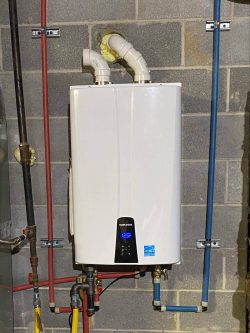
Tankless water heaters, also called on-demand or instantaneous water heaters, heat water only when you need it rather than maintaining a reservoir of hot water around the clock.
This approach can reduce energy consumption by 24 to 34 percent for households that use 41 gallons or less of hot water daily, according to the U.S. Department of Energy.
Beyond energy savings, tankless units offer a continuous supply of hot water, eliminate the risk of tank failure flooding, and typically last 20 years or more with proper maintenance. They also take up significantly less space than traditional tank heaters.
Heat pump water heaters represent the newest category of water heating technology for residential use. These systems extract heat from surrounding air and transfer it to the water, operating two to three times more efficiently than conventional electric water heaters.
While the upfront cost is higher, the energy savings can be substantial for Knoxville homeowners, particularly given our moderate climate that allows heat pumps to operate efficiently year-round.
Perhaps no area of plumbing has changed more dramatically than diagnostics. Where plumbers once relied on educated guesses and exploratory excavation, today’s professionals have access to technology that reveals exactly what is happening inside pipes without destructive investigation.
Sewer camera inspections allow plumbers to feed a waterproof camera through drain lines to visually identify blockages, cracks, root intrusion, bellied sections, and other problems. This technology eliminates guesswork and allows for targeted repairs rather than broad excavation.
For homeowners, this means faster diagnosis, more accurate estimates, and less property disruption.
Modern leak detection equipment uses acoustic sensors, thermal imaging, and other methods to locate leaks behind walls, under slabs, and underground without tearing apart your property. At
Tennessee Standard Plumbing uses electronic leak detection to pinpoint problems precisely before recommending repairs. This approach protects your landscaping, flooring, and walls from unnecessary damage.
Water conservation technology has advanced significantly, driven by both environmental awareness and rising utility costs. Modern fixtures deliver performance that meets or exceeds older models while using substantially less water.
Early low-flow toilets and showerheads earned a poor reputation for weak performance. Current designs have solved these problems through improved engineering. Modern low-flow toilets use 1.28 gallons per flush or less, compared to 3.5 to 7 gallons for toilets manufactured before 1992, while providing equivalent or better flushing power.
WaterSense-certified showerheads deliver satisfying water pressure at 2.0 gallons per minute or less.
The newest category of plumbing technology involves smart water monitors and automatic shutoff systems. These devices track water usage throughout your home, detect leaks in real time, and can automatically shut off water supply if a major leak is detected.
For homeowners concerned about water damage from burst pipes or appliance failures, these systems provide valuable peace of mind.
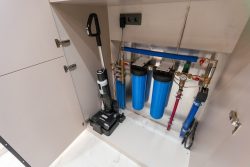 Water treatment technology has made it possible for homeowners to address water quality concerns at the source. Whether dealing with hard water, chlorine taste, sediment, or other issues, modern filtration and treatment systems offer effective solutions.
Whole-home water filtration systems treat all water entering your house, protecting fixtures and appliances while providing clean water at every tap. Water softeners have become more efficient and easier to maintain. Reverse osmosis systems deliver drinking water quality that rivals or exceeds bottled water.
For Knoxville area homeowners, water treatment can address specific regional concerns, including mineral content, sediment from aging municipal infrastructure, and seasonal variations in water quality.
The overall effect of these technological advances is that homeowners today have more options, better reliability, and greater efficiency than ever before. Whether you are dealing with an aging plumbing system that needs updating, planning a renovation, or simply want to improve your home’s water quality and efficiency, modern solutions exist that were not available even a decade ago.
At Tennessee Standard Plumbing, we help Knoxville homeowners navigate these options every day. Our licensed plumbers understand both traditional systems and the latest innovations, allowing us to recommend solutions that make sense for your specific situation, budget, and goals.
We believe in honest assessments and clear communication. When modern technology can solve a problem more effectively, we will explain how and why. When traditional approaches remain the best choice, we will tell you that too. Our goal is peaceful pipes and a peaceful life for every customer we serve.
Tennessee Standard Plumbing has been helping Knoxville homeowners with reliable plumbing solutions backed by five generations of experience. Whether you need a repair, an upgrade, or just want to understand your options, our licensed plumbers are ready to help.
Call us at (865) 352-9003 or book your appointment online. We offer same-day service when available, upfront pricing with no surprises, and the peace of mind that comes from working with Knoxville’s most trusted plumbing team.
Peaceful Pipes, Peaceful Life.
PEX, or cross-linked polyethylene, is a flexible plastic tubing that has largely replaced copper and galvanized steel in residential water supply lines. It resists corrosion, handles freezing temperatures better than rigid pipes, requires fewer connections, and costs less to install. Most homes built or repiped since the 1990s use PEX for water lines.
Lifespan varies by component. PEX piping typically lasts 40 to 50 years. Tankless water heaters can operate for 20 years or more with proper maintenance. Modern tank water heaters average 8 to 12 years. PVC and ABS drain pipes can last 50 to 100 years under normal conditions.
Tankless water heaters typically cost more to purchase and install but offer energy savings of 24 to 34 percent for typical households. They also last longer, provide unlimited hot water, and eliminate tank failure risks. For many Knoxville homeowners, the long-term value justifies the initial investment.
Signs that may indicate repiping is needed include discolored water, recurring leaks, low water pressure, visible corrosion on exposed pipes, and the presence of lead or deteriorating galvanized steel pipes. A professional inspection can determine whether repiping is necessary or if targeted repairs will address the problem.
A sewer camera inspection involves inserting a waterproof video camera into your drain lines to visually identify blockages, damage, root intrusion, and other problems. This diagnostic tool is valuable when you experience recurring drain issues, are purchasing a home, or need to determine the exact nature and location of a sewer line problem before repair.


The water coming into your home is far from pure. Whether it's city water, well water, or even some bottled water, there are millions of foreign pa... Read More

The type of gas piping used in homes and buildings determines how safe and strong it remains. A homeowner wants steady gas for cooking, hot water, ... Read More

Backflow preventers are important because they protect drinking water from hazardous contamination and ensure compliance with plumbing codes. When ... Read More