
Why Does Baking Soda and Vinegar Not Work On Drains?
Both baking soda and vinegar are highly caustic. They are, in fact, able to dissolve certain materials that one would not normally think of as bein... Read More

Same-Day Service Available
Need a Plumber in Knoxville? We’re Ready to Help!




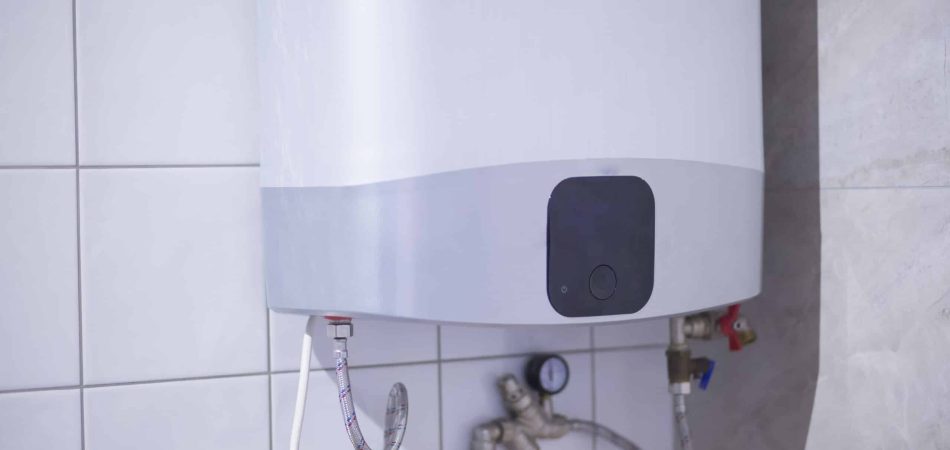
Tankless water heaters are sized by maximum flow rate (Gallons Per Minute or GPM) and temperature rise, rather than storage capacity. A typical home needs a 7-9 GPM unit, while small apartments may only need 2-3 GPM. Generally, 1–2 bathroom homes require 5-7 GPM, while 3+ bathroom homes require 8+ GPM.
Because they use less energy and can offer hot water continuously, tankless water heaters have become more popular in recent years. But, for maximum efficiency and happiness, it’s essential to choose the right size for your house.
Consider the number of individuals residing in your home, the peak times for hot water usage (such as morning showers) and whether you operate the dishwasher concurrently with your shower. Think about your preferred water temperature and the equipment you use that requires hot water, like dishwashers and washing machines.
A tankless water heater’s flow rate, in gallons per minute (GPM), is an important metric to consider while selecting the appropriate size. You’ll need to find the flow rate for each piece of hot water equipment you might use at the same time and add it up to get your required flow rate. You can usually find this information in the product specs. For instance, a tankless water heater with a minimum flow rate of 3.6 GPM would be necessary to run two fixtures in the kitchen. This could also work for a shower at the same time (2.1 GPM and 1.5 GPM, respectively).
What you want to measure as the temperature rise is the disparity between the temperature of the water going in and the temperature you want it to go out at. The input water temperature changes with the seasons and regions. There is also the intended output temperature (usually 110 to 120 degrees Fahrenheit). Together, these are the two variables that you need to consider to arrive at this calculation. To determine the temperature increase you need, subtract the input temperature from the target temperature. A temperature rise of 70 degrees is necessary to achieve a desired output of 120 degrees from 50 degrees incoming water.
If you live in a colder climate, you might have to choose a more powerful unit due to the higher temperature rises. Hard-water areas could necessitate water-softening equipment or more frequent maintenance. Gas-powered machines might not work as well in places with high altitudes.
A higher value for the Energy Factor (EF) or Uniform Energy Factor (UEF) indicates greater efficiency, so be sure to look for it. Evaluate the possible energy savings of several models to arrive at a well-informed choice. Despite the larger initial expenditure, many homeowners find that more efficient versions are worth it because of the money they save on energy bills over time.
Make sure the area you’ll be installing the tankless water heater in has enough clearance and ventilation to meet the manufacturer’s requirements. You should think about things like power needs, the capacity of the gas lines (if you’re using gas models) and the venting requirements. Improving your home’s electrical system or gas line may be necessary for certain projects, which could affect the total cost.
Models that run on gas often have greater flow rates and may be more economical to run in regions where the price of natural gas is cheap. For houses that do not have gas lines already installed, electric models are frequently more convenient and easier to install. Gas models tend to be bulkier and need special ventilation to burn properly, while electric models are commonly smaller and more convenient to place near the source of consumption.
Tankless water heater maintenance requirements are a major factor to consider when selecting the appropriate unit size. To keep the heater running efficiently and for as long as possible, routine maintenance like descaling to remove mineral deposits is essential. Because of their greater potential for heavy use, larger units may necessitate more frequent servicing than smaller ones. You want your tankless water heater to last as long as possible and work as efficiently as possible. Therefore, it’s important to get one that’s the right size for your home’s hot water needs.
Before making a purchase, you should always consult with a professional plumber. Their advice on determining the optimal size for your house will be extremely valuable. By taking into account things like consumption habits, plumbing configuration and regional weather, they can determine your home’s unique hot water demands. And they can help you choose a tankless water heater that efficiently handles both your short- and long-term needs.
Larger homes and households with high hot water demand may require multiple tankless water heater units to maintain consistent hot water, especially during peak usage. Key factors include:
Benefits of using multiple tankless units include:
For large homes or families with heavy hot water usage, multiple tankless units provide a scalable solution that meets demand without compromising performance.
A tankless water heater’s capacity is not infinite, but it can provide a constant flow of hot water. This is why it’s so important to choose the right size by considering factors like flow rate, temperature rise and usage patterns.
There are many important steps involved in installing a tankless water heater. A plumber will assess your home’s layout and hot water needs before making any placement decisions. Following that, they will install the pipes and connections, making sure that everything follows your local requirements. After they connect the gas or electricity, they’ll firmly mount the unit. The plumber will test the system after installation and make any required adjustments to ensure it works. Finally, they will go over the ins and outs of using and maintaining your new tankless water heater with you to make sure it works efficiently and lasts as long as possible.
If you don’t know what size tankless water heater to buy, Tennessee Standard Plumbing can help. We also assist homeowners in Knoxville, TN, with drain cleaning, backflow prevention, sump pump installations, gas piping and a full range of plumbing services. Contact us today to learn more about choosing the right size tankless water heater for your home.
Q: What size tankless water heater do I need for a family of 4?
A: Most families of 4 need a unit rated at 7–10 GPM, depending on how many fixtures run at the same time.
Q: How do I calculate the GPM I need?
A: Add the flow rates of all hot water fixtures you expect to use at the same time.
Q: What is temperature rise and why does it matter?
A: It’s the difference between incoming water temperature and your target output (usually 120°F). Colder water requires a more powerful unit.
Q: Can a tankless water heater be too big?
A: Yes. Oversized units cost more and may be less efficient. It’s best to size slightly above your actual needs.
Q: Does climate affect tankless water heater size?
A: Yes. Colder climates need higher-capacity units because incoming water temperatures are lower.
Q: What is a good flow rate for a tankless water heater?
A: 5–7 GPM works for most homes, while 7–10 GPM is better for larger households or high usage.


Both baking soda and vinegar are highly caustic. They are, in fact, able to dissolve certain materials that one would not normally think of as bein... Read More

Slow drains keep coming back after DIY fixes primarily because most DIY methods only clear a partial or surface clog, leaving the main accumulation... Read More

Tankless water heaters heat water instantaneously without the use of a storage tank. When a hot water faucet is turned on, cold water flows through... Read More