DIY drain cleaning uses simple tools and safe methods you already have at home to clear common clogs and save on service costs. This guide walks you through proven steps that protect your pipes and restore flow.
If recurring issues are wearing you down, Tennessee Standard Plumbing can help with fast, reliable plumbing service in Knoxville.
Table of Contents
- Key Takeaways
- Step 1: Assess the Clog
- Step 2: Check Drain Type and Pipe Health
- Step 3: Prep and Safety
- Step 4: Boiling Water Flush
- Step 5: Natural Fizz Method
- Step 6: Plunge Correctly
- Step 7: Snake the Drain
- Step 8: Vacuum Option
- Step 9: Test and Tidy Up
- When to Stop DIY and Call a Pro
- Your DIY Toolkit Checklist
- Need Help Fast in Knoxville?
Key Takeaways
- Check how severe the clog is and look for pipe damage before trying any remedy. Widespread or persistent backups often need professional help.
- Match the method to the drain type and the usual culprit, such as hair in showers or grease in kitchen sinks.
- Use dependable tools and gentle solutions, such as plungers, drain snakes, baking soda, and vinegar, to clear clogs without harming pipes.
Step 1: Assess the Clog
Start by evaluating the situation so you choose the right approach and avoid damage.
- Severity: Slow drain usually means a partial blockage. Standing water or backups suggest a deeper obstruction.
- Clues: Gurgling sounds point to trapped air behind a blockage. Odors around kitchen or bath drains can signal organic buildup.
- Scope: If more than one fixture is affected, you may have a main line issue. Stop DIY and call a pro.
Step 2: Check Drain Type and Pipe Health
Knowing the drain helps you target the cause.
- Kitchen sink: Grease, oil, food scraps
- Bathroom sink: Hair, soap film
- Shower or tub: Hair, soap scum, mineral deposits
- Toilet: Paper and non-flush items
Inspect visible piping where possible. Note rust, cracks, or leaks. Be extra careful with older or delicate materials. Avoid chemical drain cleaners that can damage components or void warranties.
Step 3: Prep and Safety
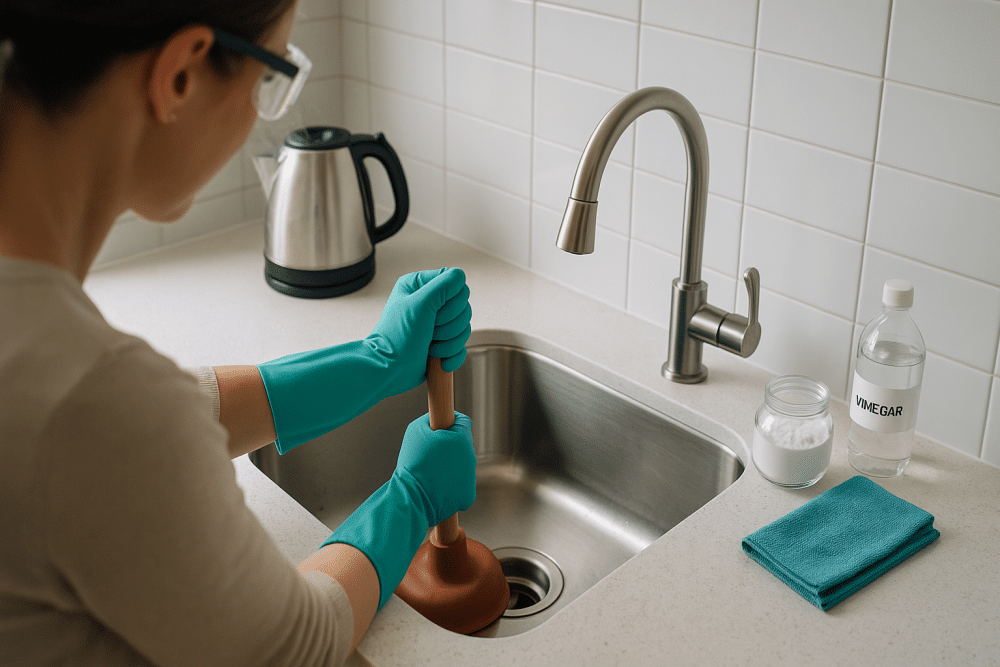
Put on rubber gloves and safety goggles. Ventilate the area. Never mix cleaning products. Read and follow all tool instructions.
Step 4: Boiling Water Flush
Great for minor grease and soap buildup.
- Bring a pot of water to a boil.
- Pour slowly down the drain in two or three stages, pausing a few seconds between pours.
- Repeat if needed.
- For PVC systems, use hot tap water instead, since prolonged high heat can soften plastic.
Tip: Do a hot water flush weekly for simple upkeep.
Step 5: Natural Fizz Method
This eco-friendly combo can help with light organic buildup.
- Pour ½ cup baking soda into the drain.
- Add 1 cup white vinegar and let it fizz for about 15 minutes.
- Flush with hot water.
Use periodically to help prevent new buildup.
Step 6: Plunge Correctly
A good seal and steady motion make all the difference.
- Cover the drain opening fully with a plunger.
- Pump firmly for about 20 seconds to build suction.
- Check flow and repeat until water moves freely.
For sinks with overflow openings, cover the overflow with a damp cloth to improve suction.
Step 7: Snake the Drain
A drain snake reaches deeper blockages such as hair clumps.
- Feed the snake into the drain and rotate the handle to hook debris.
- Pull the cable out slowly to avoid splashes.
- Run hot water to rinse loosened material.
Hand-crank snakes work well for most household drains. For toilets, use a closet auger designed for that fixture.
Step 8: Vacuum Option
A wet/dry shop vacuum can pull out stubborn debris.
- Set the vacuum to liquid mode and create a tight seal at the drain opening.
- Turn it on briefly to draw material out.
- Rinse with hot water.
Do not use a standard household vacuum.
Step 9: Test and Tidy Up
Run hot water for one to two minutes to confirm full flow. Clean strainers and stoppers, and wipe down the work area. Consider installing hair catchers in showers and using sink strainers in kitchens to reduce future clogs.
When to Stop DIY and Call a Pro
- Multiple fixtures are backing up or you suspect a main line blockage
- Strong sewage odors or gurgling in several drains
- Recurring clogs that return soon after DIY efforts
- Old or fragile piping that may be at risk
- You need advanced solutions such as camera inspection or hydro-jetting
Hydro-jetting and similar methods are professional services that safely restore full pipe diameter without harsh chemicals.
Your DIY Toolkit Checklist
- Rubber gloves and safety goggles
- Plunger
- Drain snake or auger
- Baking soda and white vinegar
- Wet/dry shop vacuum (optional)
- Bucket, old towels, and a flashlight
Need Help Fast in Knoxville?
Clogs happen, but they do not have to disrupt your day. For professional drain cleaning in Knoxville, contact Tennessee Standard Plumbing for a quick assessment and safe, long-lasting results. Our licensed team handles everything from tough sink clogs to main line blockages.
